
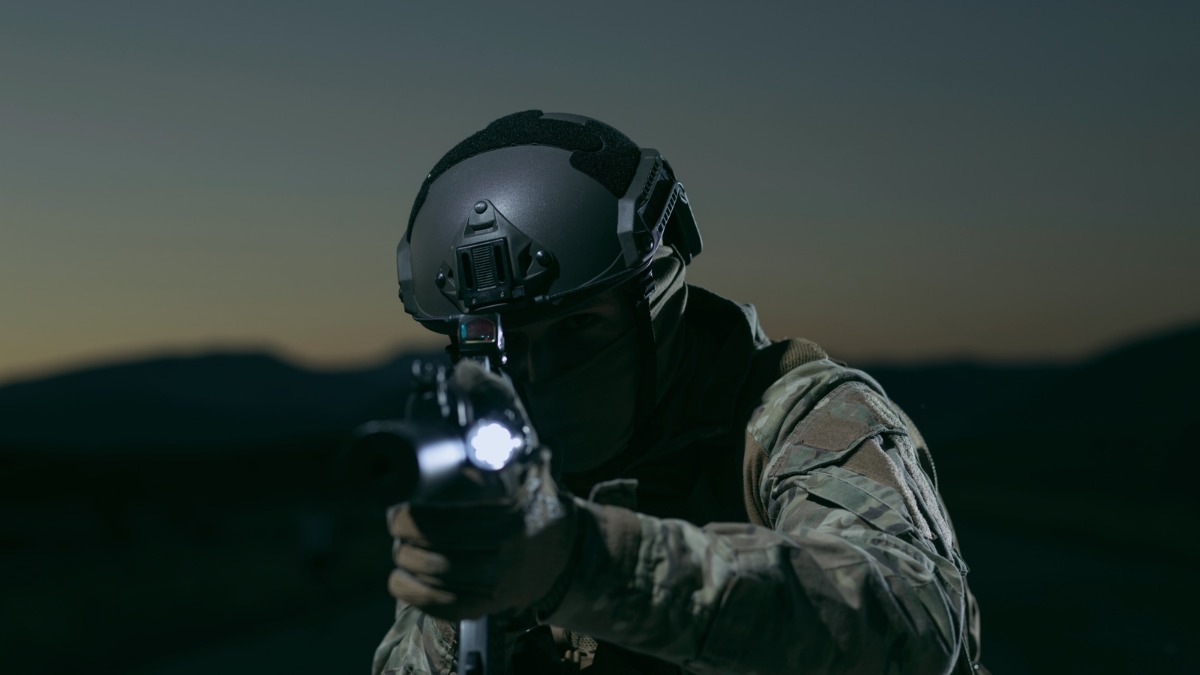
When we think about military casualties, combat injuries dominate the conversation. But a substantial share of losses in remote and high-altitude deployments come from non-battle causes — heat stroke, hypothermia, altitude sickness, exhaustion, and delayed medical response in terrain where help is hours away.
Why Non-Battle Casualties Are Hard to Prevent
Soldiers deployed to remote, high-altitude, or forward postings often operate far from immediate medical support. A physiological emergency — dehydration, hypoxia, cardiac strain — can escalate quickly, and without continuous monitoring, the first sign of trouble is often the soldier collapsing, not a data point flagged minutes earlier.
What Commanders Actually Need
It's not enough to know that something is wrong after the fact. Commanders and medical teams need a live, unit-wide view of every soldier's physiological status — heart rate, oxygen levels, motion, temperature — so early warning signs can be caught and acted on before they become emergencies.
Built for the Field, Not the Lab
Consumer fitness wearables aren't designed for this. They assume network connectivity, gentle use conditions, and short battery cycles. Military use demands rugged, extreme-temperature-tolerant hardware, multi-day battery life, and — critically — the ability to function with zero network infrastructure.
Aaryavarta's AI-Based Human Vital Intelligence System was built around this exact requirement: wearables issued like standard kit, Edge AI processing on-device, and a command dashboard that gives a live, unit-wide health picture — helping speed up medical prioritisation and reduce preventable, non-battle casualties in hostile, remote terrain.
Prevention Over Response
The long-term goal isn't just faster medical response — it's catching physiological deterioration early enough that a response isn't needed at all. That shift, from reactive to predictive, is what indigenous, defense-grade AI systems are starting to make possible.