
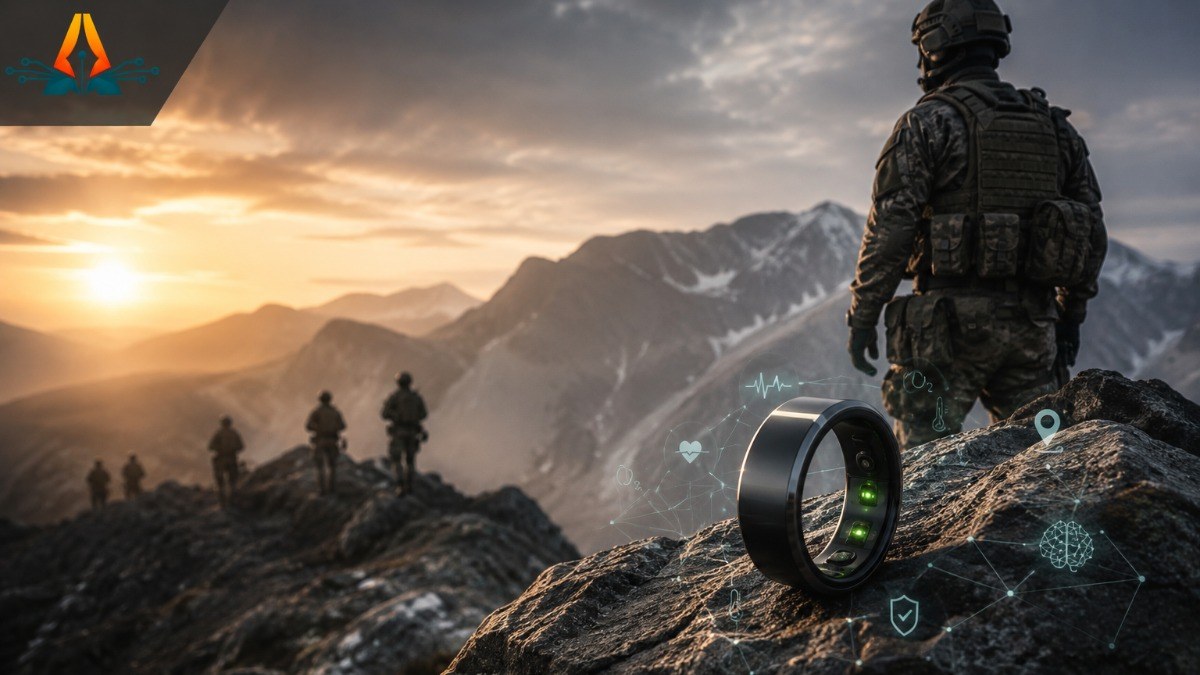
At a glance, a rugged safety wearable and a consumer fitness tracker might look like they solve the same problem — both measure heart rate, motion, and other vital signs. But the environments they're built for couldn't be more different, and that difference shapes almost every design decision.
Connectivity Is Not Guaranteed
Consumer wearables lean heavily on cloud syncing — a phone nearby, a Wi-Fi connection, a data plan. In a mine shaft, a tunnel under construction, or a forward defense post, none of that exists. Mission-critical wearables need to process data on-device using Edge AI, so the system keeps working even when there's no network to talk to.
Durability Isn't Optional
A fitness tracker is designed for a gym or a morning run. Field-deployed hardware has to survive extreme temperatures, dust, moisture, impact, and continuous multi-day use — often for shifts far longer than a typical consumer use case ever anticipates. Field-swappable batteries and adaptive power management become essential, not a nice-to-have.
The Stakes Are Different
If a fitness tracker misses a reading, you lose a data point on a dashboard. If a safety wearable misses an early warning sign of heat stress or hypoxia in a soldier, miner, or tunnel worker, the consequence can be irreversible. That difference in stakes is why mission-critical wearables are engineered for precision and reliability first — not step counts and sleep scores.
Designed With the People Who Wear Them
Comfort still matters — a wearable that interferes with existing gear or is uncomfortable over a 12-hour shift won't get worn consistently, no matter how capable it is. That's why field-ready wearable design has to be co-developed with real user feedback, not just lab-tested specifications.
This is the thinking behind Aaryavarta's approach to the AI-Based Human Vital Intelligence System — hardware built for the field first, with Edge AI and a command dashboard layered on top, delivered as one deployment-ready system rather than a repurposed consumer device.