
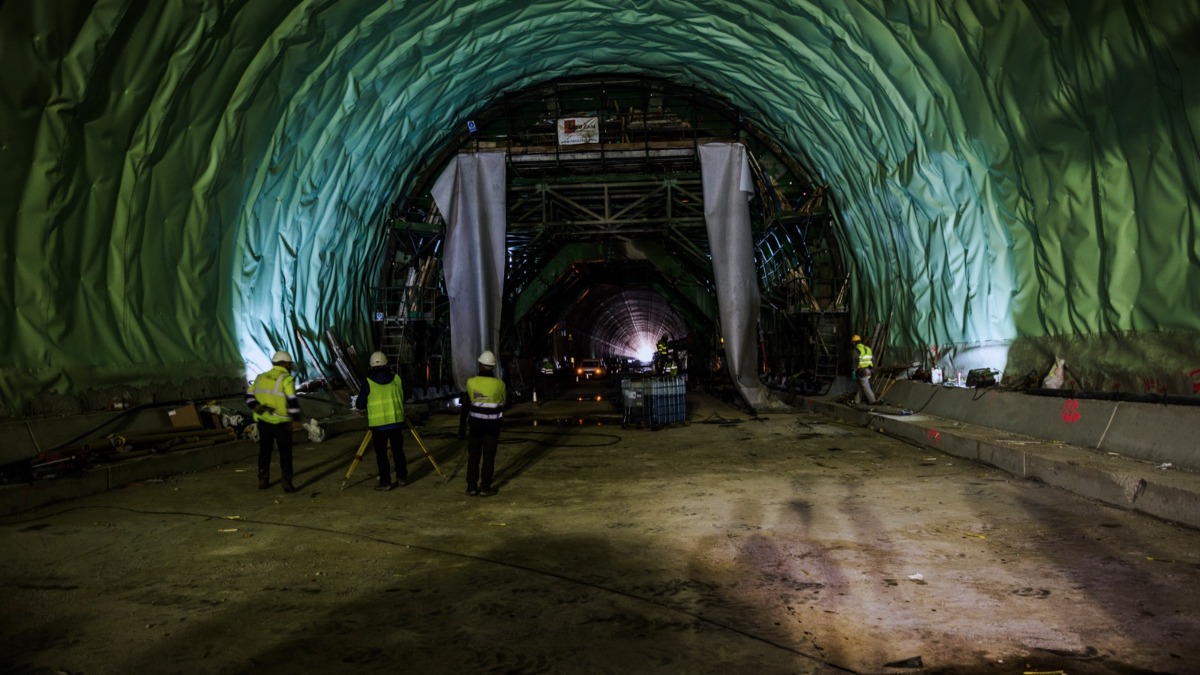
Tunnel construction sites sit at the intersection of two safety challenges that rarely show up together anywhere else: confined, enclosed spaces and a near-total absence of network connectivity. Most industrial safety systems are designed to solve one of these problems — very few are designed to solve both at once.
Why Standard Safety Systems Fall Short Underground
Cloud-connected monitoring dashboards, IoT sensors that phone home over Wi-Fi, even basic radio check-ins — all of them assume some baseline of connectivity that simply doesn't exist deep inside a tunnel under construction. When that assumption breaks, the safety system breaks with it, right when workers are in the most enclosed, hardest-to-evacuate part of the site.
What Confined-Space Monitoring Actually Requires
A tunnel construction crew needs a system that keeps working with zero infrastructure — no dependency on a network signal reaching the rock face. That means vital sign monitoring — heart rate, oxygen levels, motion, temperature — has to be processed on the wearable itself using Edge AI, with alerts routed to a command post the moment a worker's readings cross a risk threshold.
Speed of Detection Equals Speed of Response
In a confined, disconnected space, evacuation and emergency response already take longer than in an open worksite. That makes early detection even more critical — the sooner a supervisor knows a worker is showing signs of exhaustion or distress, the more time there is to respond before it becomes a medical emergency.
Aaryavarta's AI-Based Human Vital Intelligence System was designed with exactly this kind of confined, disconnected environment in mind — real-time monitoring that speeds up emergency response and strengthens safety compliance for tunnel and underground construction crews, without needing any site connectivity to function.
Compliance Is the Floor, Not the Goal
Meeting safety compliance requirements is necessary, but it shouldn't be the ceiling. The goal for any tunnel construction operation should be a genuinely safer worksite — one where physiological warning signs are caught in real time, not discovered after a shift ends.